EverGreen Nursery Inc.
814-1 Black Spruce Plugs (Packed in Units of 25 Plugs)
814-1 Black Spruce Plugs (Packed in Units of 25 Plugs)
Couldn't load pickup availability
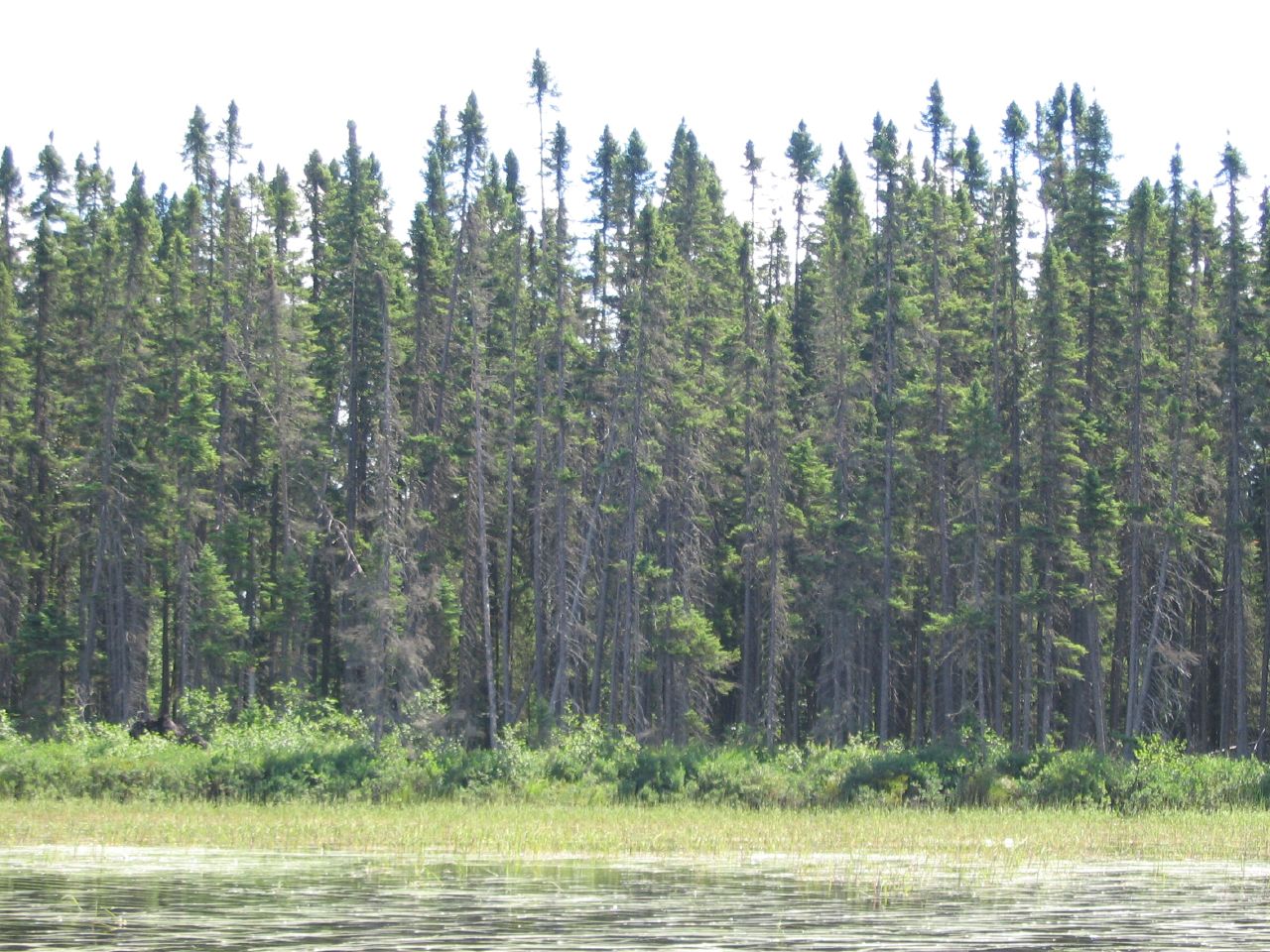
The black spruce (Picea mariana) is a small-to-medium-sized evergreen conifer native to the boreal forests and cold, wet, acidic soils of North America. It is known for its narrow, spire-like crown and preference for poorly drained areas like bogs and swamps, earning it the alternate names "bog spruce" or "swamp spruce".
Physical Characteristics
Size: Typically grows 20-50 feet (6-15 meters) tall, though it can occasionally reach greater heights in favorable conditions. It has a slow growth rate.
Needles: The foliage consists of dense, short, four-sided needles, about 1/4 to 1/2 inch long, with a dark blue-green color often coated with a whitish powder.
Cones: The cones are the smallest of all spruces, egg-shaped to nearly round, and only 1/2 to 1 1/2 inches (1.5–4 cm) long. They start as a dark purple color, ripen to a reddish-brown, and uniquely, remain on the tree for several years, often in dense clusters near the top of the crown.
Bark: The bark is thin, scaly, and grayish-brown or reddish-brown.
Branches: Its branches are typically short, compact, and slightly drooping, with upturned tips.
Habitat and Range
Black spruce is widespread across Canada (where it is the official tree of Newfoundland and Labrador) and extends into the northern United States, including Alaska, the Great Lakes region, and the upper Northeast. It thrives in cool climates and is often a pioneer species in bogs and wetlands. Its shallow root system makes it well-adapted to areas with permafrost and wet soils, though it makes the tree susceptible to wind damage.
Uses and Significance
Pulpwood: The primary commercial use of black spruce is for its long, strong wood fibers, which are highly valued for making high-quality paper pulp.
Timber: Although generally small, the wood is also used for dimensional lumber, general millwork, and even musical instrument sounding boards due to its resonance qualities.
Wildlife: It provides important cover and nesting sites for many bird species and small mammals.
Traditional Uses: Indigenous peoples historically used various parts of the tree for practical and medicinal purposes, including using the resin for chewing gum, the inner bark for poultices, and the roots for sewing canoes and making baskets.
Fire Ecology: The cones are semi-serotinous, meaning they open to release seeds in response to the heat of a forest fire, allowing the species to regenerate rapidly and dominate after a burn.