Alpha Nurseries, Inc.
819 BR Spruce-Red
819 BR Spruce-Red
Couldn't load pickup availability
The red spruce (Picea rubens) is a coniferous evergreen tree native to high elevations in the Appalachian Mountains and throughout the northeastern United States and Canada. It is highly valued for its wood, particularly as a tonewood for musical instruments, and for paper pulp and construction lumber.
Key Characteristics
Size and Form: The tree typically grows 60 to 100 feet (18 to 30 meters) tall, with a trunk diameter of 1 to 2 feet, and has a narrow, conical crown. Exceptional specimens can be taller and live for 250 to over 400 years.
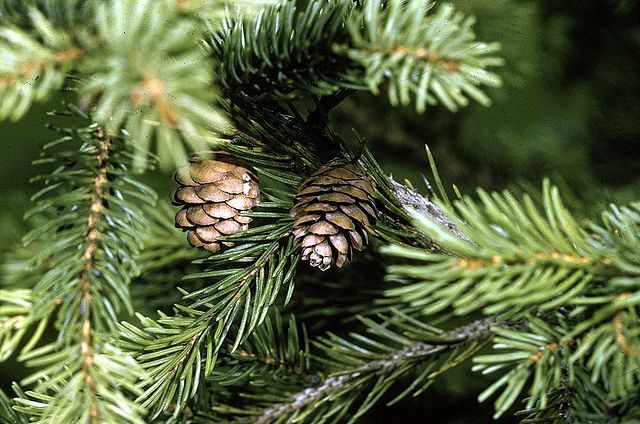
Needles: The needles are sharp, four-sided, yellow-green, about 1/2 to 5/8 inches long, and grow individually all around the twig. They feel prickly or "spiny" to the touch, which helps distinguish them from the soft, flat needles of a fir.
Cones: The cones are cylindrical and hang down from branches. They are glossy red-brown, 1 1/4 to 2 inches (3 to 5 cm) long, and fall from the tree the first year after maturing in the fall.
Bark: The bark is thin and scaly, gray-brown on the surface and reddish-brown on the inside.
Habitat: Red spruce prefers cool, moist climates and well-drained, acidic soils. In the southern part of its range, it is found only at higher elevations (typically above 4,000 feet).
Ecological Importance and Restoration
Red spruce forests provide critical habitat and food sources for various wildlife species, including white-tailed deer (providing winter cover), spruce grouse, red squirrels, and white-winged crossbills.
Historically, extensive logging and subsequent wildfires in the late 19th and early 20th centuries drastically reduced the range of red spruce, particularly in the central and southern Appalachians. The species is also sensitive to acid rain and climate change, which can deplete essential soil calcium and reduce the tree's freeze tolerance, contributing to its decline.
The wood is light, strong, and straight-grained. It has a unique resonance quality that makes it highly prized for sounding boards in musical instruments like guitars, violins, and pianos. It is also used for paper pulp, general construction lumber, and as a Christmas tree. Historically, the tree's resin was used to make spruce gum, a forerunner of modern chewing gum.