Alpha Nurseries, Inc.
879-1 BR Maple-Black (Packed In Units of 25 Seedlings)
879-1 BR Maple-Black (Packed In Units of 25 Seedlings)
Couldn't load pickup availability
The black maple (Acer nigrum) is a large, native North American deciduous tree closely related to the sugar maple, and in fact is often considered a subspecies of it (Acer saccharum subsp. nigrum). It is a valuable hardwood tree, used for lumber and maple syrup production.
Key Characteristics
Size and Form: The black maple is a large tree, growing to a height of 60 to 100 feet (18 to 30 meters) with a dense, rounded crown when grown in the open.
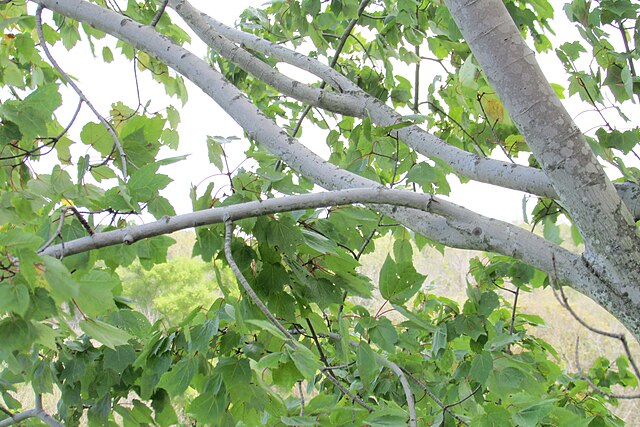
Leaves: The leaves are simple, opposite, and typically have three (occasionally five) lobes. A distinctive feature is that the leaf edges tend to droop downwards, giving them a wilted appearance. The undersides of the leaves are also soft and downy, and small leafy appendages called stipules are often present at the base of the leaf stem.
Bark: The bark is generally dark gray-brown to black and on mature trees becomes deeply furrowed with thick, irregular ridges or plates.
Flowers and Fruit: In the spring, small, yellowish-green flowers appear in drooping clusters. These give way to the characteristic paired, winged seeds called samaras, which ripen in late summer to autumn.
Fall Color: The foliage turns attractive shades of yellow, orange, and sometimes red in the autumn.
Habitat and Range
Black maples grow on a variety of soils, but are most commonly found in rich, moist woods and wooded slopes, including bottomlands and ravines. Their native range extends throughout the midwestern and eastern United States and southern Canada, and they tend to be more tolerant of heat and drought than the sugar maple.
Uses
Like the sugar maple, the black maple's sap can be tapped and boiled down to make maple syrup. Its wood is also a strong, hard maple that is commercially important and used for flooring, furniture, and musical instruments. It is also planted as a shade tree in parks and along streets.