Iron Baraga Conservation District
891 BR Walnut-Black
891 BR Walnut-Black
Couldn't load pickup availability
Black walnut - Juglans nigra
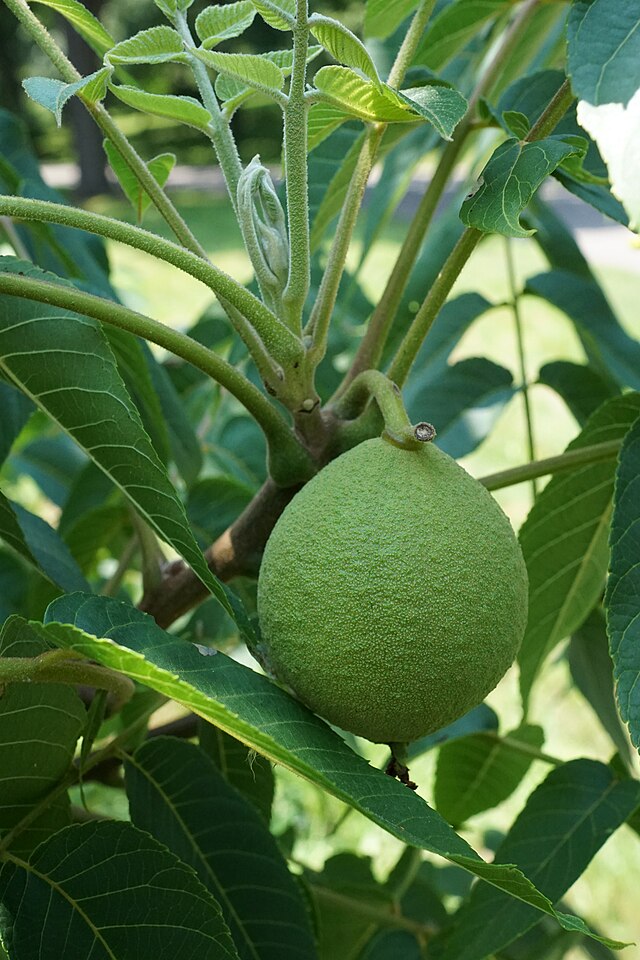
Identification: Black walnut trees are recognized by their compound leaves featuring alternate, toothed leaflets emerging from a central stem. Bark is dark brown to black, with deep furrows and pits. In the fall, trees produce a nut crop with a green husk and black inner kernel.
Height: 50-75 feet
Preferences: Full sun. Hardiness zones 4-9.
Wildlife value: Walnuts are an important wildlife food source eaten by species including woodpeckers, foxes and squirrels.
Uses: Walnut wood is prized in woodworking for its handsome grain and resistance to warping. It is often used to make furniture and cabinets. Walnut husks can be used to make a dark brown natural wood stain and dye.
The roots of the walnut produce a natural herbicide called juglone. This compound is toxic to certain other plants, such as tomatoes, peppers, potatoes, and azaleas. Most of the toxicity is limited to within the tree's drip line, but sensitive plants should be spaced at least 50 feet away from a mature tree.