Alpha Nurseries, Inc.
915-1 Coffeetree-Kentucky (Packed In Units of 25 Seedlings)
915-1 Coffeetree-Kentucky (Packed In Units of 25 Seedlings)
Couldn't load pickup availability
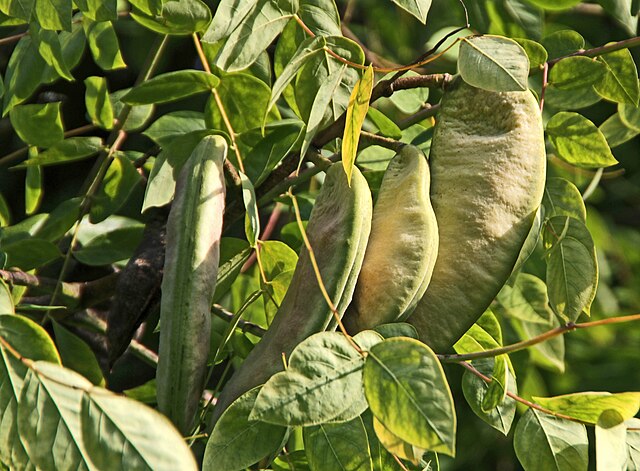
Kentucky Coffeetree: (Gymnoclaudus dioicus) grows to a notable height of 80 to 100 feet and boasts the largest leaves of any native woodland tree, which are compound and large. The bark is rough, gray-brown, and furrowed, eventually developing into stiff, flat plates as it matures. In late spring, the tree produces greenish-white flowers, followed by the development of large, dark brown, woody pods that contain seeds. Historically, early settlers roasted and ground the seeds of the Kentucky coffeetree to use as a coffee substitute; the roasting process is believed to neutralize the toxic effects of cytisine, but the raw seeds and pods remain dangerous. Additionally, a tea made from the leaves and pulp was sometimes used as a laxative. In terms of habitat and cultivation, this tree naturally thrives in bottomland forests along streams and in moist woodlands. It is well-suited for urban conditions, making it a popular choice for shade or street trees in parks, yards, and along boulevards. The Kentucky coffeetree prefers full sun and a diverse range of soil types, including ones with high organic matter and clay, and is tolerant of poor soils and drought once established. Interestingly, the scientific name Gymnocladus dioicus translates to "naked branch," referring to the tree's large, coarse branches that remain bare for much of the year. The large seeds may have already been dispersed by now-extinct large mammals, such as mastodons, which could swallow the seeds and facilitate their dispersal. Moreover, the Kentucky coffeetree is relatively resistant to pests and diseases, making it a favorable alternative to trees like ash that have been affected by the emerald ash borer.