Alpha Nurseries, Inc.
968-1 Sumac-Staghorn (Packed In Units of 25 Seedlings)
968-1 Sumac-Staghorn (Packed In Units of 25 Seedlings)
Couldn't load pickup availability
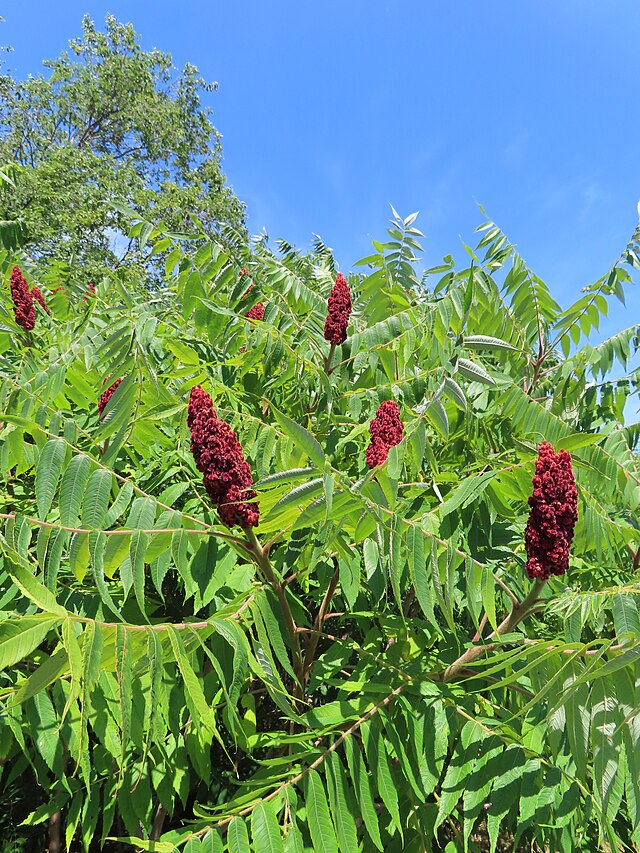
Staghorn Sumac: (Rhus typhina) is a large, low-maintenance shrub or small tree native to eastern North America, recognized for its fuzzy branches that resemble deer antlers, vibrant fall foliage, and conical red fruit clusters. It is ecologically significant, providing food and shelter for wildlife, and has various human uses, including making drinks and historically tanning leather. This plant thrives in full sun to part shade and adapts to a variety of soil conditions, often found growing in colonies along roadsides and forest edges. In terms of appearance and characteristics, staghorn sumac typically grows 8 to 20 feet tall, although it can reach up to 35 feet. Young branches sport soft, velvety hairs, which contribute to its "staghorn" name. The large compound leaves feature bright green leaflets during summer that transform into brilliant shades of yellow, orange, and red in the fall. The plant produces large, upright clusters of fuzzy red berries (drupes) that persist throughout the winter. Staghorn sumac's native range spans from Quebec and Ontario in the north to Georgia and Iowa in the south. It can be found in diverse habitats, including roadsides, forest edges, and stream banks. While it prefers full sun, it also tolerates part shade and adapts well to various soil types, even thriving in poor and dry conditions. It exhibits a growth pattern that allows it to spread by root suckers, forming extensive colonies. The ecological value of staghorn sumac is notable, particularly as a food source. The berries serve as a vital food supply for many birds during the winter months, such as wild turkeys, bluebirds, and robins. Other wildlife, including deer, rabbits, and moose, browse on its foliage, while the plant provides nectar for butterflies and other pollinators. Additionally, the colonies formed by staghorn sumac offer nesting and shelter sites for numerous bird species. Humans have found various uses for staghorn sumac as well. The tart, lemon-flavored berries can be steeped in cold water to create a refreshing drink. Historically, the plant has been utilized in medicine and for tanning leather, and its stems have been used for weaving baskets.