Alpha Nurseries, Inc.
969-1 Thimbleberry (Packed In Units of 25 Seedlings)
969-1 Thimbleberry (Packed In Units of 25 Seedlings)
Couldn't load pickup availability
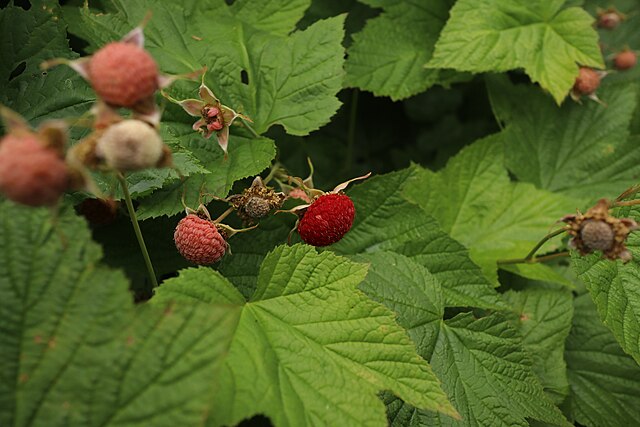
Thimbleberry: (Rubus parviflora) is a thornless, deciduous shrub in the rose family, recognized for its large, velvety leaves, white spring flowers, and red, edible berries that resemble raspberries. Native to western and northern North America, it spreads via underground rhizomes and is frequently found in partial shade on slopes or near water sources. This plant can be useful for erosion control and provides food for various wildlife. It grows quickly and can form dense stands, necessitating some management to prevent it from becoming invasive. In terms of its physical characteristics, thimbleberry has large, soft, maple-like leaves that are often larger than a person's hand. Its flowers are large, white, and fragrant, blooming in the spring. The fruit is a red, edible berry made up of many small drupelets, resembling a raspberry, and the name "thimbleberry" comes from this resemblance. The stems are thornless canes that can reach heights of up to 8 feet. Thimbleberry prefers partial shade and moist to mesic soil, typically thriving on slopes, near streams, or in forest openings. It spreads via underground rhizomes and can form dense thickets, so it requires adequate space for optimal growth. This versatile plant serves multiple purposes. Ecologically, it provides food for wildlife and acts as a host plant for some insects. It is also valuable for erosion control on slopes. In horticulture, thimbleberry can be utilized for informal hedges or in food forests and native plant gardens. The fruit can be consumed fresh or transformed into jams, jellies, and other preserves. Historically, various parts of the plant have been used for medicinal purposes, although this should not replace professional medical advice. For proper management and care, it is advisable to prune thimbleberry after the fruit harvest by removing canes that have finished fruiting. Additionally, thinning out crowded or spindly canes in late winter while leaving healthy ones is beneficial. It's important to watch for pests like aphids and diseases such as powdery mildew, anthracnose, and botrytis. Additionally, since the plant is not deer-resistant, new plants may require protection from deer and rabbits. need protection.