Alpha Nurseries, Inc.
970-1 Washington Hawthorn (Packed In Units of 25 Seedlings)
970-1 Washington Hawthorn (Packed In Units of 25 Seedlings)
Couldn't load pickup availability
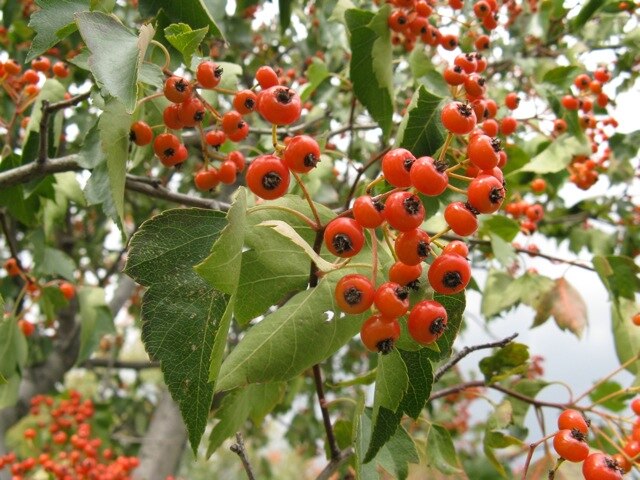
Washington Hawthorn: (Crataegus phaenopyrum) is a small deciduous tree that is known for its ornamental features, including white flowers, vibrant red fruits that persist into winter, and attractive fall foliage. This tree typically grows to 25-30 feet tall and is hardy in USDA zones 4-8. Its year-round interest and support for wildlife make it valuable; however, the prominent thorns on its branches suggest that it is best suited for natural areas rather than residential spaces near walkways. In terms of characteristics and appearance, this tree can grow up to 30 feet tall and wide, with a moderate growth rate of approximately 12-24 inches per year. It produces white flowers in late spring or early summer, attracting bees to its blooms. Small, bright red, berry-like fruits develop on the tree, often persisting through winter and serving as a food source for birds and other wildlife. The foliage is particularly noteworthy, with leaves emerging reddish-purple, turning green in the summer, and then changing to a spectacular orange, scarlet, or purple in the fall. The tree also features long, sharp thorns on its branches, up to 3 inches long, and hard, strong wood that can be used for various tools. When it comes to growing conditions and care, this tree thrives in full sun but can tolerate partial shade. It adapts to a wide variety of soil conditions, including acidic, alkaline, loamy, wet, and sandy soils, though it prefers well-drained soil. Once established, it is drought-tolerant. While the tree is relatively resistant to rust, it can be susceptible to leaf spot. In terms of planting and use, the tree is suitable for urban environments and for planting near drainage channels, wetlands, or natural areas. It can also be grown as a hedge or a specimen tree. However, due to its thorns, it is not ideal for planting near high-traffic areas. To ensure safety, it is best to avoid planting it directly in front of residences where people may come into contact with it, and it should be placed in a location where its thorns will not pose a hazard.