Alpha Nurseries, Inc.
971-1 Winterberry Holly (Packed In Units of 25 Seedlings)
971-1 Winterberry Holly (Packed In Units of 25 Seedlings)
Couldn't load pickup availability
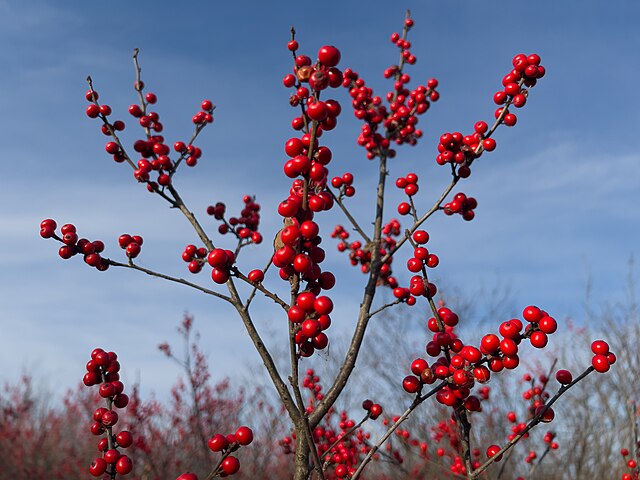
Winterberry Holly: (Ilex verticillata) Winterberry is a native North American shrub recognized for its striking bright red berries that persist throughout winter, offering a crucial food source for birds. This deciduous plant, which loses its leaves in the fall, thrives in moist to wet, acidic soils and can be found in locations with full sun to partial shade. For berry production, both male and female specimens are necessary, as the berries themselves are toxic to humans. In terms of its characteristics, winterberry typically grows between 6 to 12 feet tall. Its leaves transform into vibrant shades of yellow, purple, or orange before falling in autumn, while the shrub showcases bright red, sometimes gold, berries on bare branches during winter. Small white flowers bloom in the spring, attracting various pollinators. The fleshy, red drupe fruits remain on the plant throughout the winter, providing essential sustenance for birds such as northern cardinals, although deer usually avoid the berries. It flourishes in moist to wet, acidic soils with a pH range of 5.5 to 6.5 and can adapt to various soil types, including clay and loam. When it comes to growing and caring for winterberry, it can thrive in environments with full sun to deep shade. This plant prefers moist to wet soil conditions and exhibits low drought tolerance. As a dioecious species, winterberry requires a male plant to effectively pollinate multiple female plants in order to produce berries. Maintenance is generally simple, as it has few insect or disease problems, and applying fertilizer designed for acid-loving plants can be beneficial if the soil is too neutral or alkaline. Winterberry is highly valuable for wildlife, providing a critical food source for birds during winter and serving as a host plant for numerous insects. It is also an excellent choice for landscaping, particularly in rain gardens and wetland mitigation projects, as well as for adding vibrant winter color to the landscape. Historically, Native Americans referred to it as "fever bush" due to its medicinal uses, although caution is advised, as it is toxic if ingested by humans.